


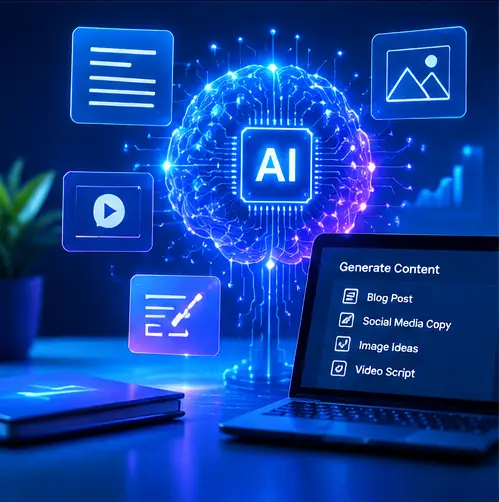
How AI Is Transforming Digital Marketing in 2026
Artificial intelligence is changing how marketers research audiences, create content, analyze performance, and manage campaigns. AI-powered tools can help businesses complete repetitive tasks more efficiently and discover insights from marketing data.
For small businesses and digital marketing agencies, these tools can support productivity without requiring a large marketing team. However, successful AI marketing still depends on strategy, human judgment, and understanding customer needs.
What Is AI in Digital Marketing?
AI in digital marketing refers to using artificial intelligence technologies to assist with activities such as content planning, customer segmentation, data analysis, advertising optimization, and automated communication.
AI tools can generate suggestions and identify patterns, but their outputs should be reviewed before publication or use in important decisions.
1. AI-Powered Content Creation
AI writing tools can help marketers brainstorm blog topics, prepare outlines, generate headline ideas, and repurpose existing content for different platforms.
For example, a digital marketing agency can turn a customer question into a blog outline, a social media caption, and a short video script.
The final content should be fact-checked, edited for the brand’s voice, and improved with original examples. Publishing large amounts of unreviewed AI content can create quality and trust problems.
2. AI for Search Engine Optimization
AI-assisted SEO tools can help organize keyword ideas, identify related topics, analyze page content, and develop content briefs.
Marketers can use these suggestions to understand search intent and identify gaps in existing articles.
AI does not guarantee Google rankings. Helpful content, technical accessibility, relevance, and a good user experience remain important.
3. Personalized Marketing
AI can assist with audience segmentation and recommendations based on appropriate customer data.
For example, an online store may recommend relevant products based on a customer’s browsing or purchase history, subject to applicable privacy requirements.
Personalization should be transparent, respectful, and useful rather than intrusive.
4. Marketing Automation
Marketing automation can schedule campaigns, send welcome emails, organize leads, and trigger follow-up messages based on user actions.
When combined with AI, automation tools can also help summarize customer interactions or suggest responses.
Businesses should monitor automated messages to avoid errors, irrelevant communication, and excessive contact.
5. AI in Digital Advertising
AI-powered advertising features can help platforms optimize delivery, test creative variations, and allocate campaign budgets according to campaign objectives.
Marketers still need to define the target audience, set budgets, monitor conversion tracking, and evaluate business outcomes.
Automation should support human decision-making rather than replace campaign oversight.
6. Benefits of AI Marketing Tools
AI tools can help businesses:
- Save time on repetitive tasks.
- Generate content ideas more quickly.
- Analyze marketing data.
- Support customer segmentation.
- Assist with campaign testing.
- Improve workflow efficiency.
The results depend on tool quality, data accuracy, human review, and the marketing strategy.
Challenges and Responsible Use
AI-generated content can contain inaccurate information, outdated claims, or generic wording. Customer information must also be handled responsibly.
Protect confidential data, check licensing and usage terms, review factual claims, and ensure that marketing communications comply with applicable privacy and advertising rules.
Conclusion
AI in digital marketing offers opportunities to improve research, content workflows, automation, and campaign analysis. The strongest approach combines AI-assisted efficiency with human creativity, factual accuracy, ethical practices, and a clear understanding of the audience.
Businesses that use AI thoughtfully can build more efficient marketing processes while maintaining the trust of their customers.